Water Filtration in Lewisville, Installed With Care
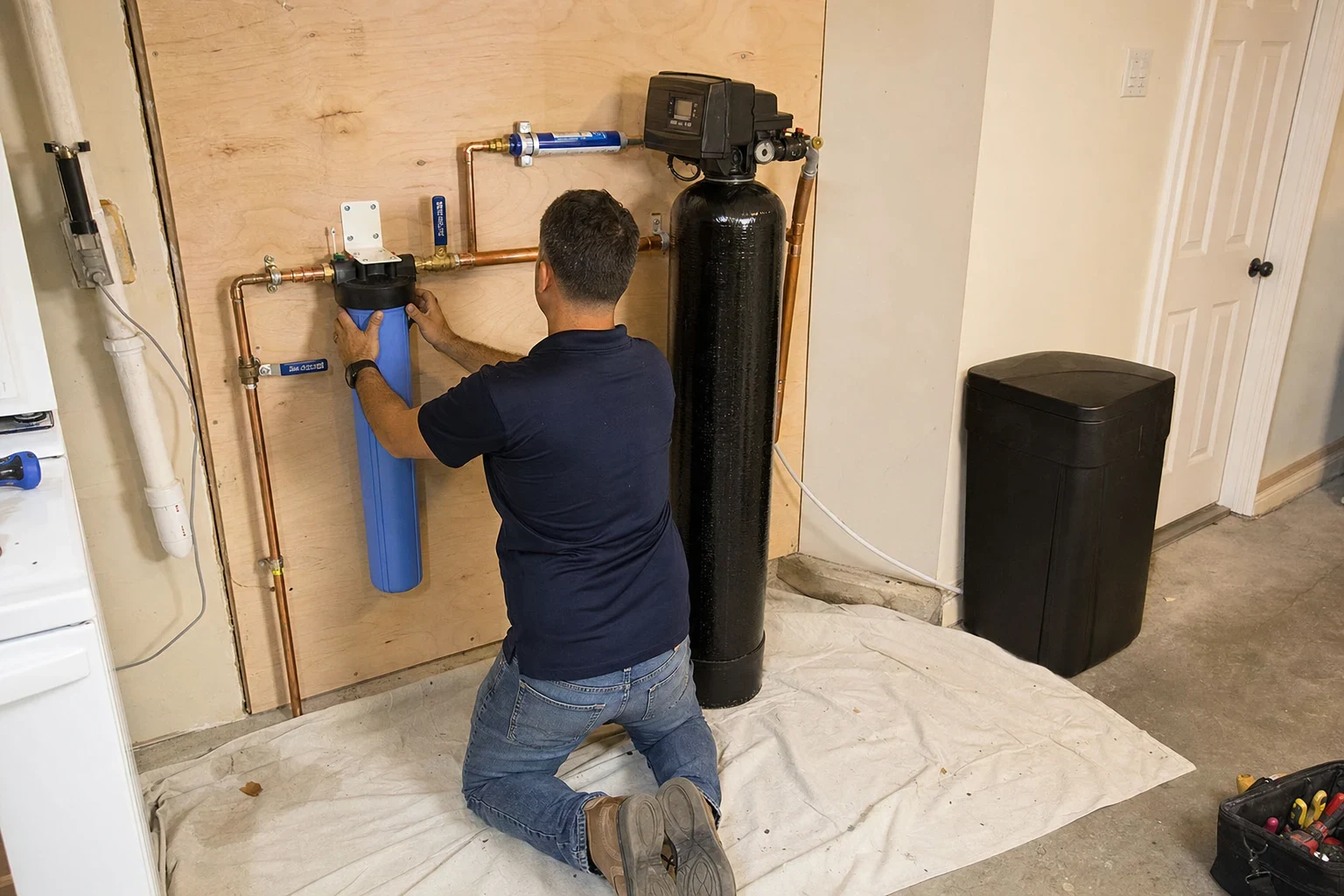
We test your water first, then fit whole-house carbon filtration, under-sink reverse osmosis, iron and sediment filters, or a softener only when a hardness test calls for one. Every valve, fitting and drain line is set up to stay easy to service. We work in Lewisville, Flower Mound and Highland Village.
- Results first, advice second
- Itemized estimates in writing
- Serviceable, labeled equipment
- Work area left clean
- 4.9 stars from 325 Google reviews
Areas We Serve
We are based in Lewisville and work throughout the surrounding area. That includes The Colony, Highland Village, Hickory Creek, Carrollton, Flower Mound, Grapevine, Coppell, Corinth, Lantana and Lake Dallas.
- Lewisville
- The Colony
- Highland Village
- Hickory Creek
- Carrollton
- Flower Mound
- Grapevine
- Coppell
- Corinth
- Lantana
- Lake Dallas
If your town is not on this list, mention it when you phone and we will say plainly whether it falls within our range. Our Service Areas page has more detail.

Filtration Services for Your Home
Most homes need one or two well-chosen pieces of equipment, not a wall full of tanks. We start with water testing so the choice rests on your results. If chlorine taste and odor are the complaint, whole-house carbon filtration usually answers it, while under-sink reverse osmosis is the better match for the water you drink and cook with. Iron and sediment filtration is for homes seeing stains or grit, and water softeners go in only after a hardness test confirms the need. Once a system is in, our filter replacement and maintenance visits keep it performing the way it did on day one.
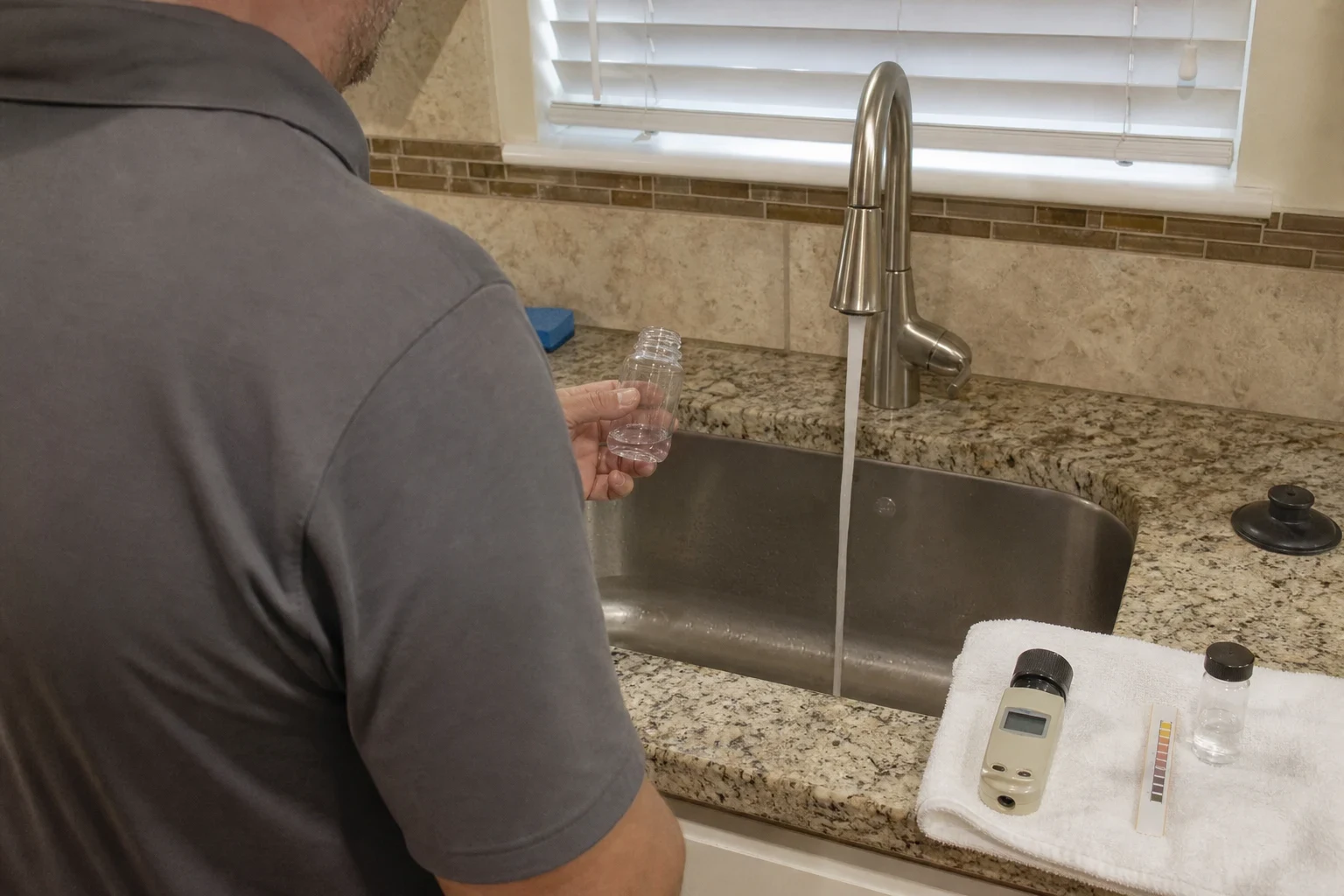
Water testing
We sample your water carefully, read the results with you and only then talk about whether any filtration makes sense for your home.
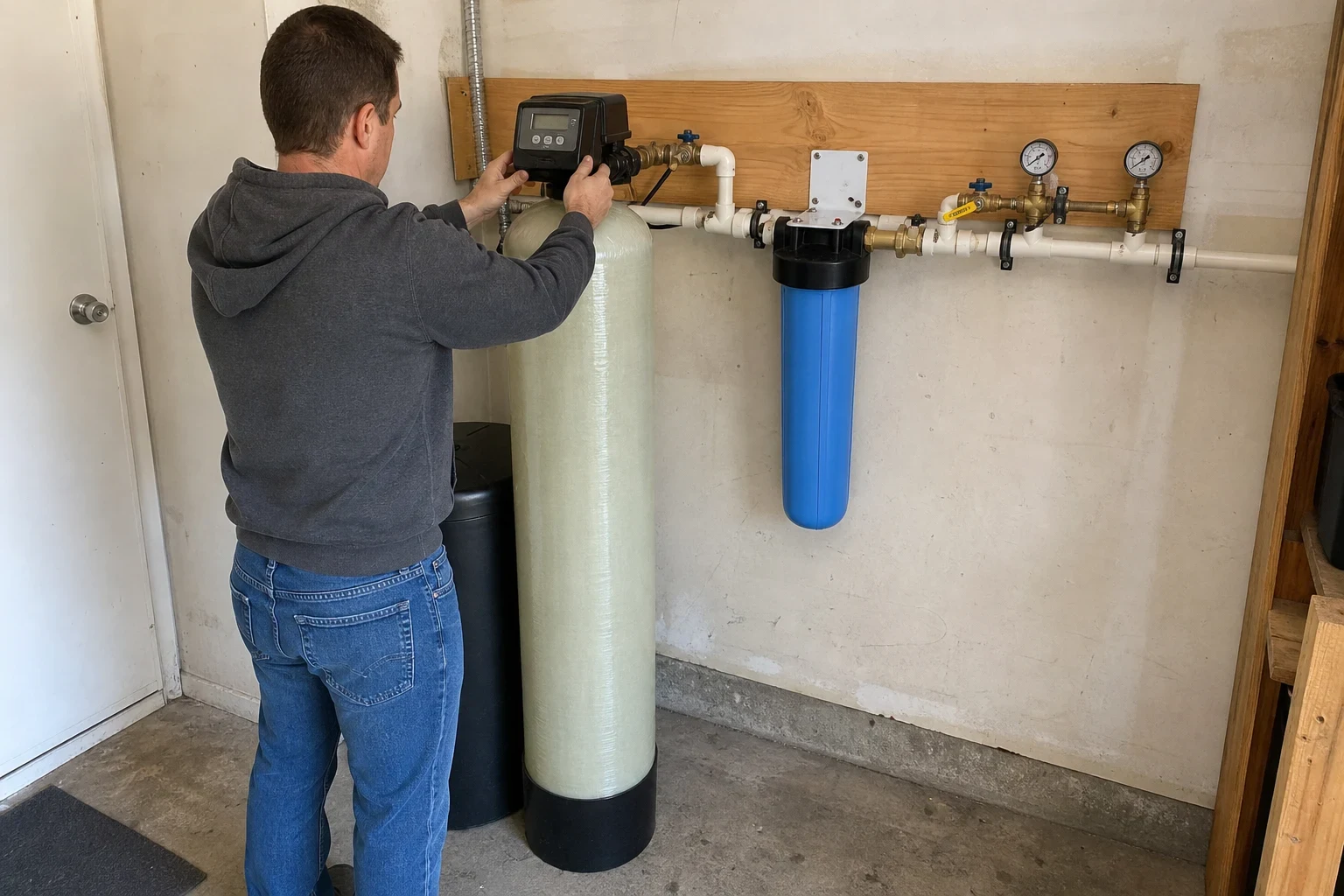
Iron and sediment filtration
Stop rust stains, grit and clogged aerators with a filter chosen from a water test and plumbed in so it is easy to service for years.
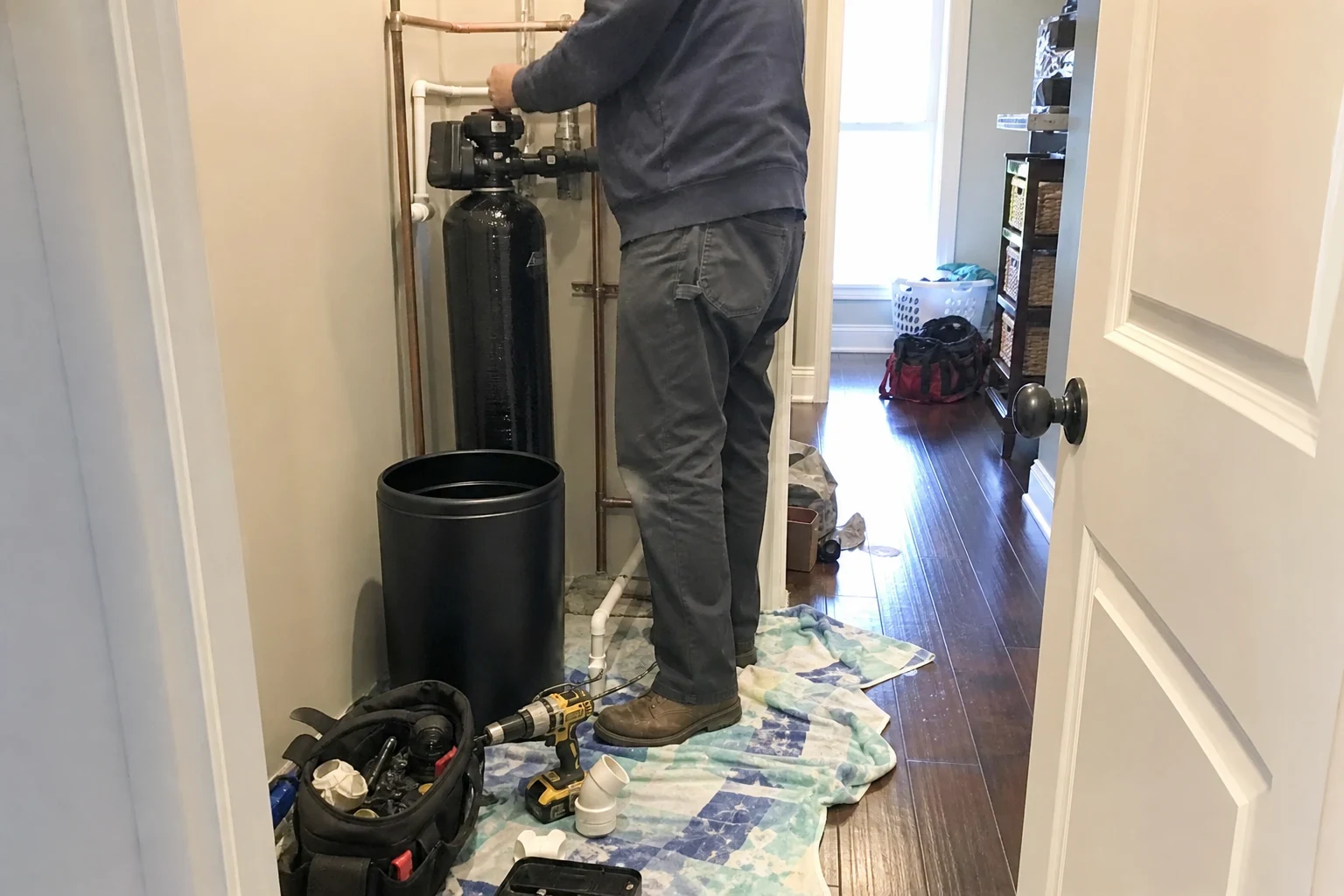
Water softeners
We test your water's hardness first, then size and install a softener only if the numbers call for one, with every connection finished to last.
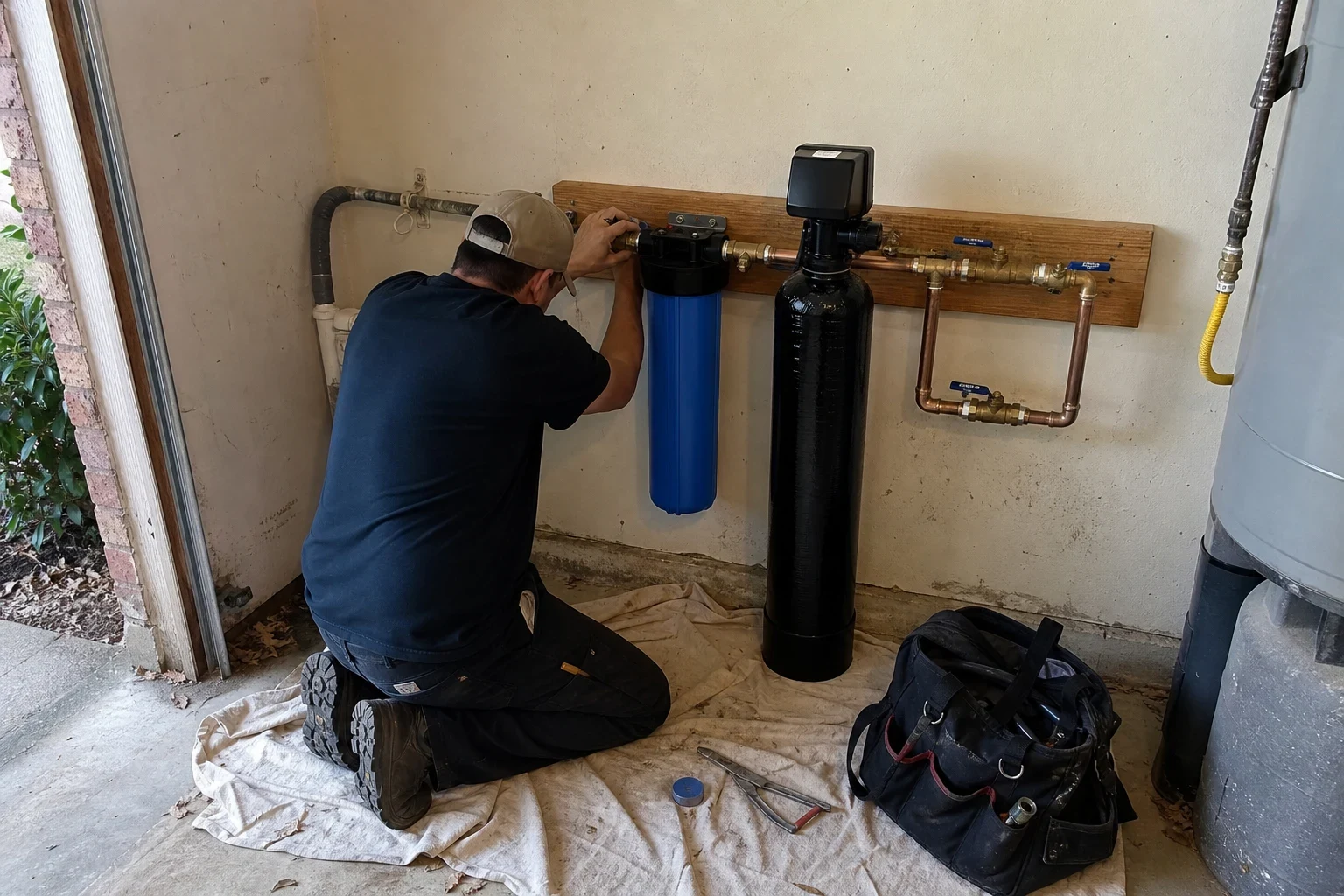
Whole-house carbon filtration
A carbon system at your main line that reduces chlorine taste and smell at every faucet and shower, plumbed with bypass and shutoff valves so service stays easy.
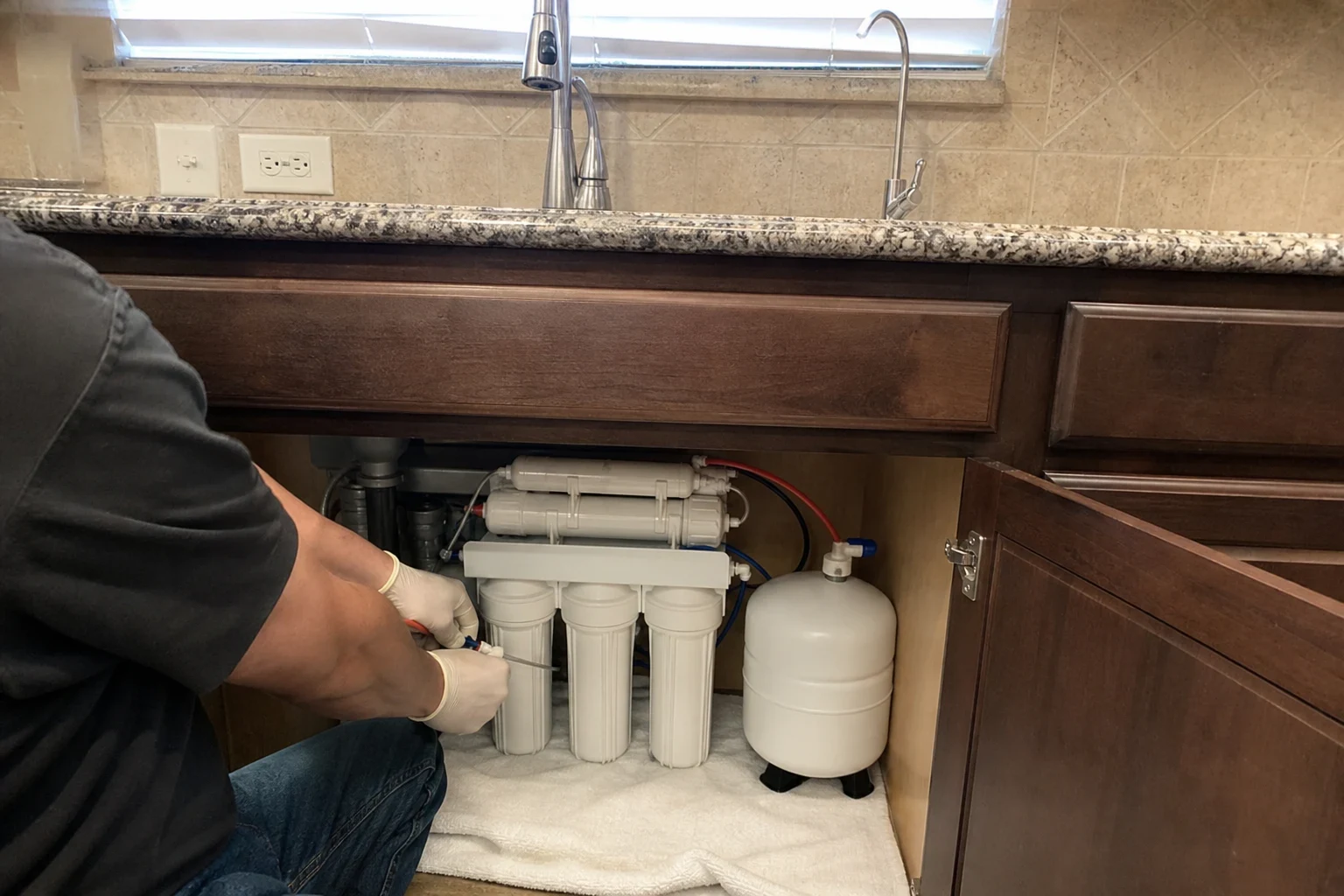
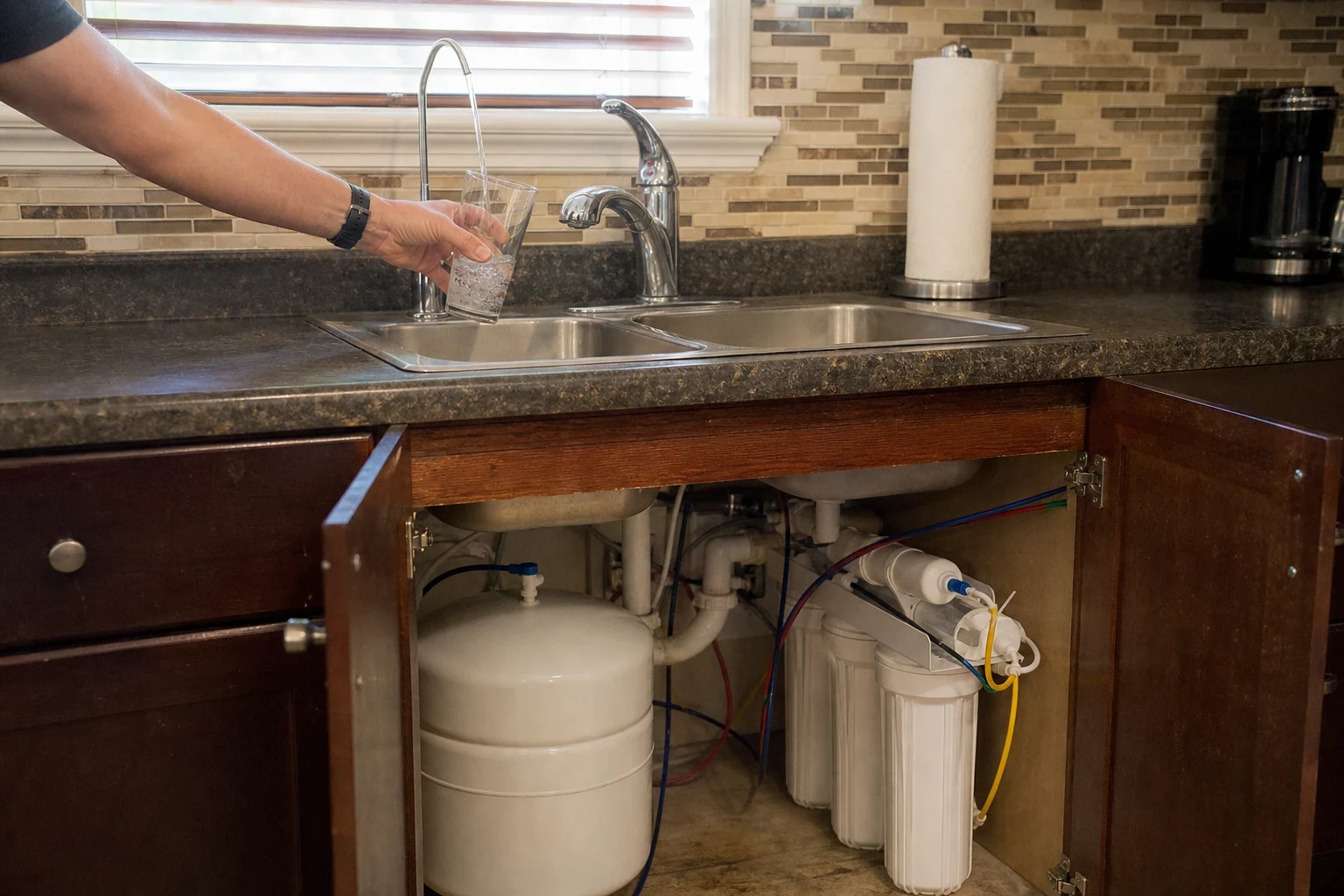
Under-sink reverse osmosis
A dedicated drinking water faucet fed by a reverse osmosis system under your sink, fitted neatly and checked for leaks before we leave.
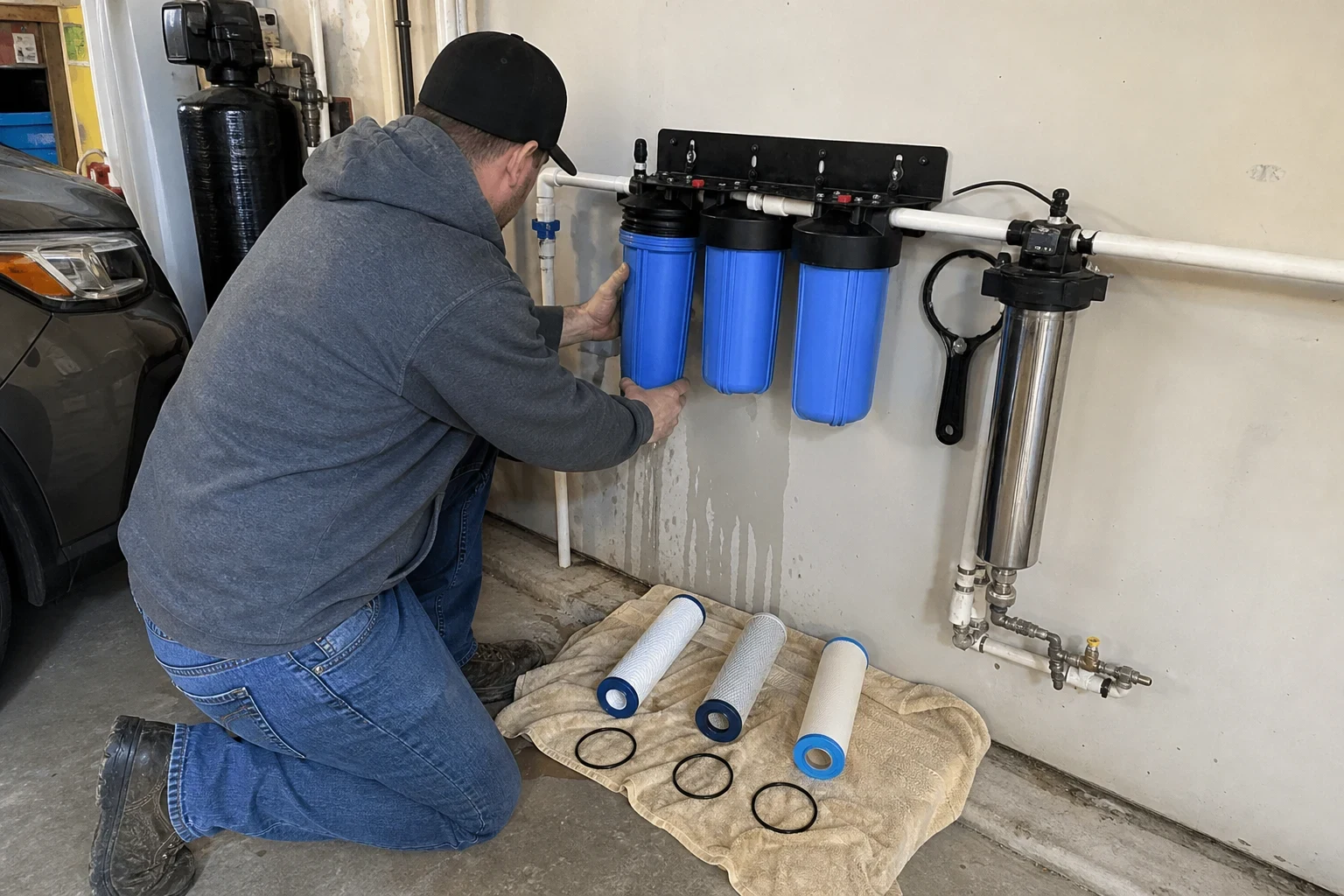
Filter replacement and maintenance
Scheduled cartridge changes, housing cleaning and leak checks for whole-house, RO, iron and softener systems, so your water stays the way it was on day one.
Why Homeowners Choose Us
A filter is only as good as the way it is plumbed in. We are NSF certified, and we spend our time on the parts most people never see, because those are the parts that decide whether a system lasts.
Bypass valves on every whole-house system
We install a three-valve bypass so you can keep water running to the house while a filter is serviced or a tank is changed. It costs little at install time and saves a real headache later.
Mounted, level and supported
Housings and tanks are fastened to a backer board or set on a firm, level base, never left hanging from the pipe. Unsupported equipment strains the fittings every time water hammers through, and that is where slow leaks start.
Room to work around it
We leave clearance below each housing so a cartridge can drop out without disconnecting anything. You should be able to change a filter yourself without a flashlight in your teeth.
Proper drains and air gaps
Reverse osmosis drain lines get an air gap or an approved drain saddle placed above the trap, so wastewater can never siphon back toward the membrane. Backwashing equipment gets a drain that meets code and does not splash.
Labels you can read in five years
Each housing is marked with the cartridge type and the date it went in, and flow direction is clear. When it is time for service, there is no guessing.
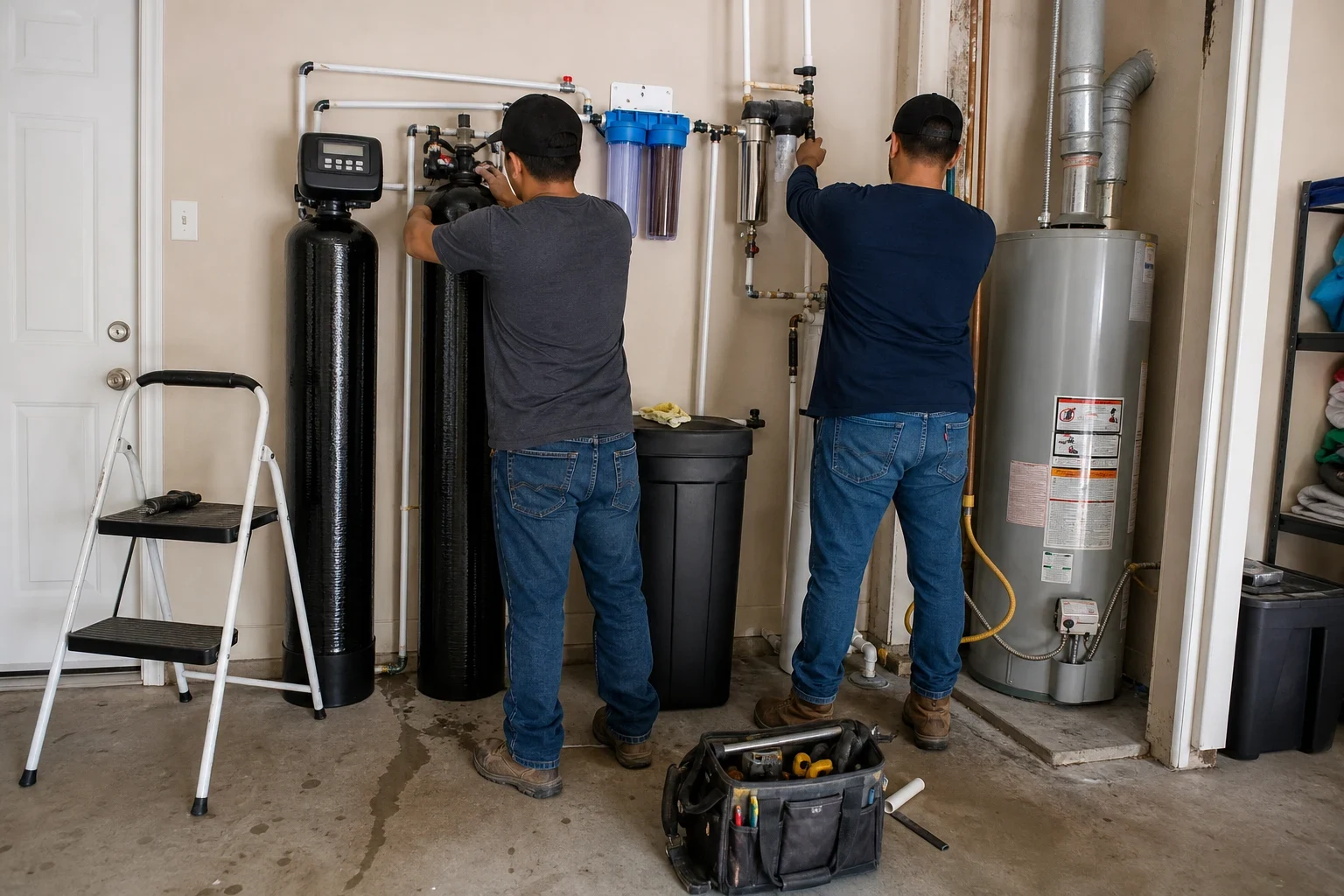
The People Behind the Work
Water Filtration Lewisville is a family-owned, BBB accredited company that tests, installs and services residential filtration equipment for homes in Lewisville and the nearby towns. That narrow focus is deliberate. A modest system put in properly serves you better than a large one that was never matched to your water.
North Texas summers push garage temperatures high, so we think about where equipment sits and how it is shaded and supported. Small choices like that, along with clean joints and clear labels, are what keep a system quiet and dry for years. When you call, you talk with people who care about how the job looks after the cabinet door closes.
- In business
- 4
- Warranty
- Lifetime warranty on the majority of parts
- Certifications
- NSF certified
What Install Day Looks Like
Most installations are finished in about half a day. Here is how the work unfolds, from the first phone conversation to a tidy cabinet or garage wall.
- 1
A conversation and a water test
We ask what you are noticing: taste, odor, spots on glass, stains in the tub. Then we test your water so the recommendation is based on numbers, not a hunch.
- 2
A plain recommendation in writing
You get a line-item estimate that says what we suggest, why, and what we do not think you need. If a simple carbon filter solves the problem, that is what we will tell you.
- 3
Careful installation
We lay down drop cloths, shut off the water and cut in at the right spot. Joints are made with the correct fittings for your pipe, equipment is mounted and leveled, and every connection is checked under pressure.
- 4
Walkthrough and cleanup
Before we leave, we flush the system, show you the bypass and how to change a cartridge, and clean up the work area. You will know what to expect and when the next service is due.
Common Questions
Is my tap water unsafe?
City water is treated and tested before it reaches you, and most homes are not dealing with a safety problem. What people usually notice is chlorine taste or odor, spotting, or concerns about older plumbing. A test tells you what is actually in your water so you can decide calmly.
Do I really need a water softener?
Many homes do not. A softener earns its place once a hardness test shows mineral levels high enough to leave scale on fixtures or spots on glassware. If your reading comes back low, we say so and suggest something simpler, or nothing at all.
Will filtration deal with lead from older plumbing?
When lead turns up at a faucet, the source is most often aging solder, brass fixtures or older pipe inside the house rather than the supply. For drinking and cooking water, under-sink reverse osmosis handles that concern well. A test at your own tap is the way to learn whether lead is there at all.
What does whole-house carbon filtration actually change?
It reduces chlorine taste and odor at every faucet and shower. Many people notice the difference most in showers and in water from the kitchen tap. It does not soften water, so if hardness is also a problem, that is a separate step.
How often do filters need to be changed?
It depends on the system and how much water your home uses. Sediment cartridges may need changing every few months, while carbon media and reverse osmosis membranes last longer. We label each housing with its install date and can handle filter replacement and maintenance for you.
Will installation make a mess or shut off my water all day?
The water is off only while we cut in and connect, usually a short part of the visit. We protect floors and cabinets, and we clean up before we go. Once the bypass is installed, future service rarely needs a full shutoff.
How do I get an estimate?
Phone us and describe what you are noticing. We will set up a time to test your water and look at your plumbing, then give you a written, itemized estimate.
What Shapes the Cost of a System
No two installs cost the same, and we would rather explain why than hand you a number with no reasoning behind it. These are the things that move the price most. Your written estimate lists each one.
Estimates are written and itemized, based on your test results and a look at your plumbing. Nothing is added after the fact without your say, and installs come with a lifetime warranty on the majority of parts.
- What your test shows
- Treating chlorine taste alone is a simpler job than dealing with iron, sediment and hardness together. The results decide how many stages you actually need.
- Point of use or whole house
- An under-sink reverse osmosis unit serves one faucet. A whole-house carbon or iron system treats every tap and needs larger media tanks and more plumbing.
- Access to your incoming line
- When the water supply enters along an open garage wall, the plumbing goes quickly. A pipe tucked behind drywall, under the slab or inside a cramped closet takes longer to tap into neatly.
- Pipe material and condition
- Copper, PEX and older galvanized lines each call for their own connectors. Should the pipe where we plan to connect turn out to be corroded, we stop, show it to you and talk through the choices before any cutting.
- Drain and power needs
- Softeners and backwashing filters need a nearby drain and often an outlet. Adding either one adds to the job.
- Equipment grade
- Housings, valve heads and media vary in build quality. We will show you the difference and let you decide how far to go.
Find Out What Your Water Needs
Start with a test, and get an honest answer about what is worth installing. If we do the work, it will be built to last and easy to service.